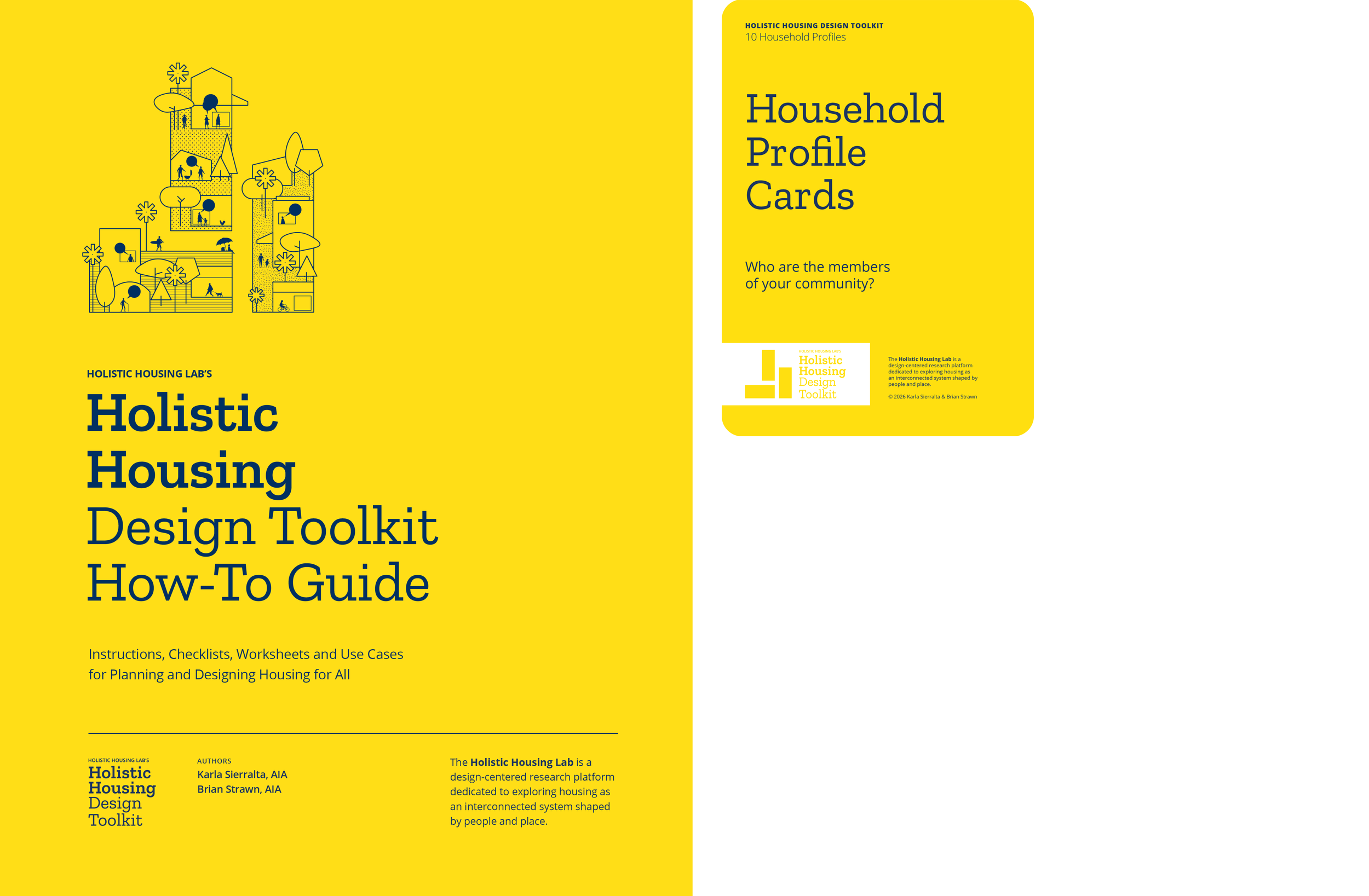
Holistic Housing Design Toolkit
The Holistic Housing Design Toolkit translates research into accessible resources for understanding, discussing, planning, and designing housing. Organized into three complementary sets, the Toolkit combines qualitative and quantitative approaches with hands-on methods for engaging communities, exploring possibilities, and making informed design decisions.
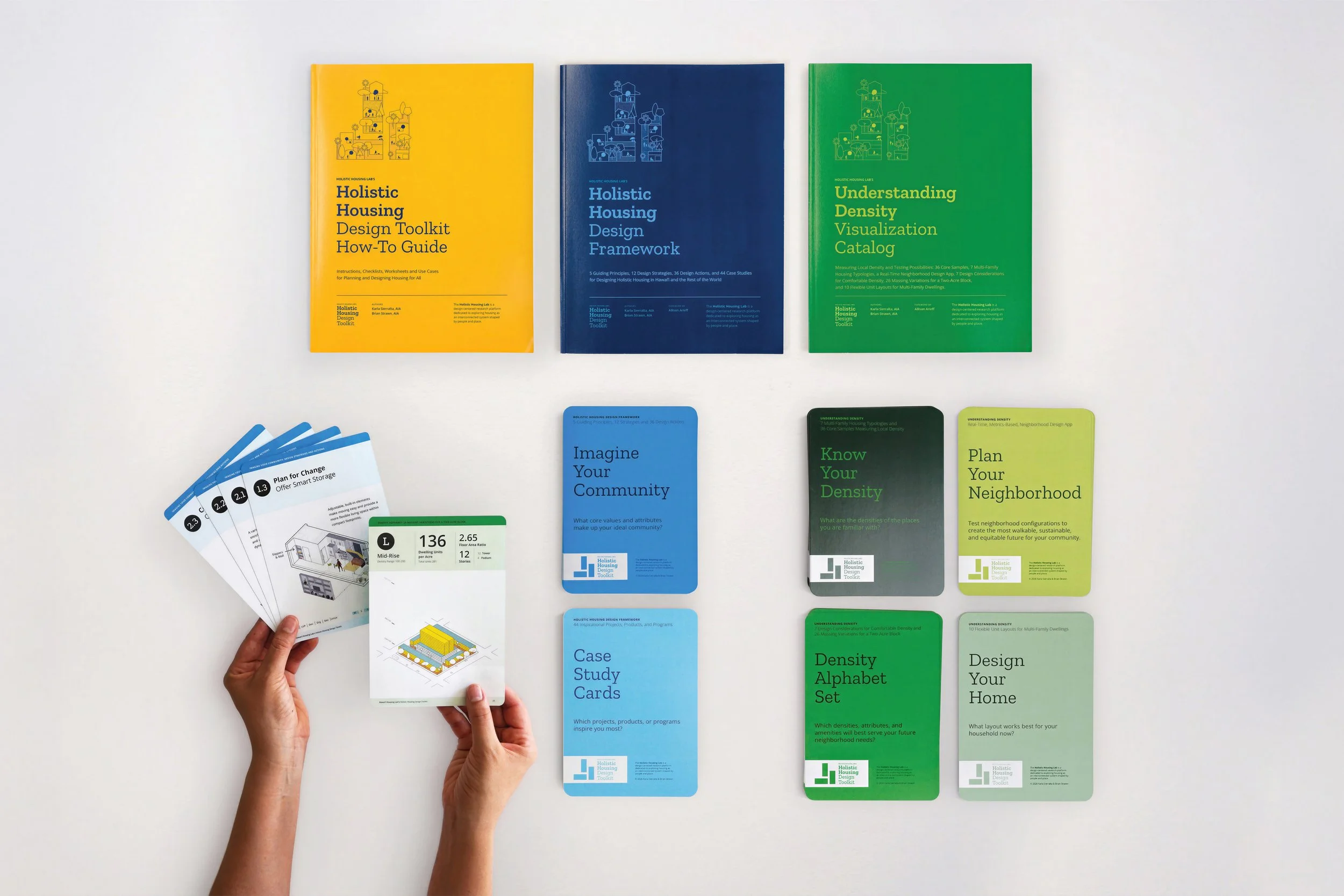
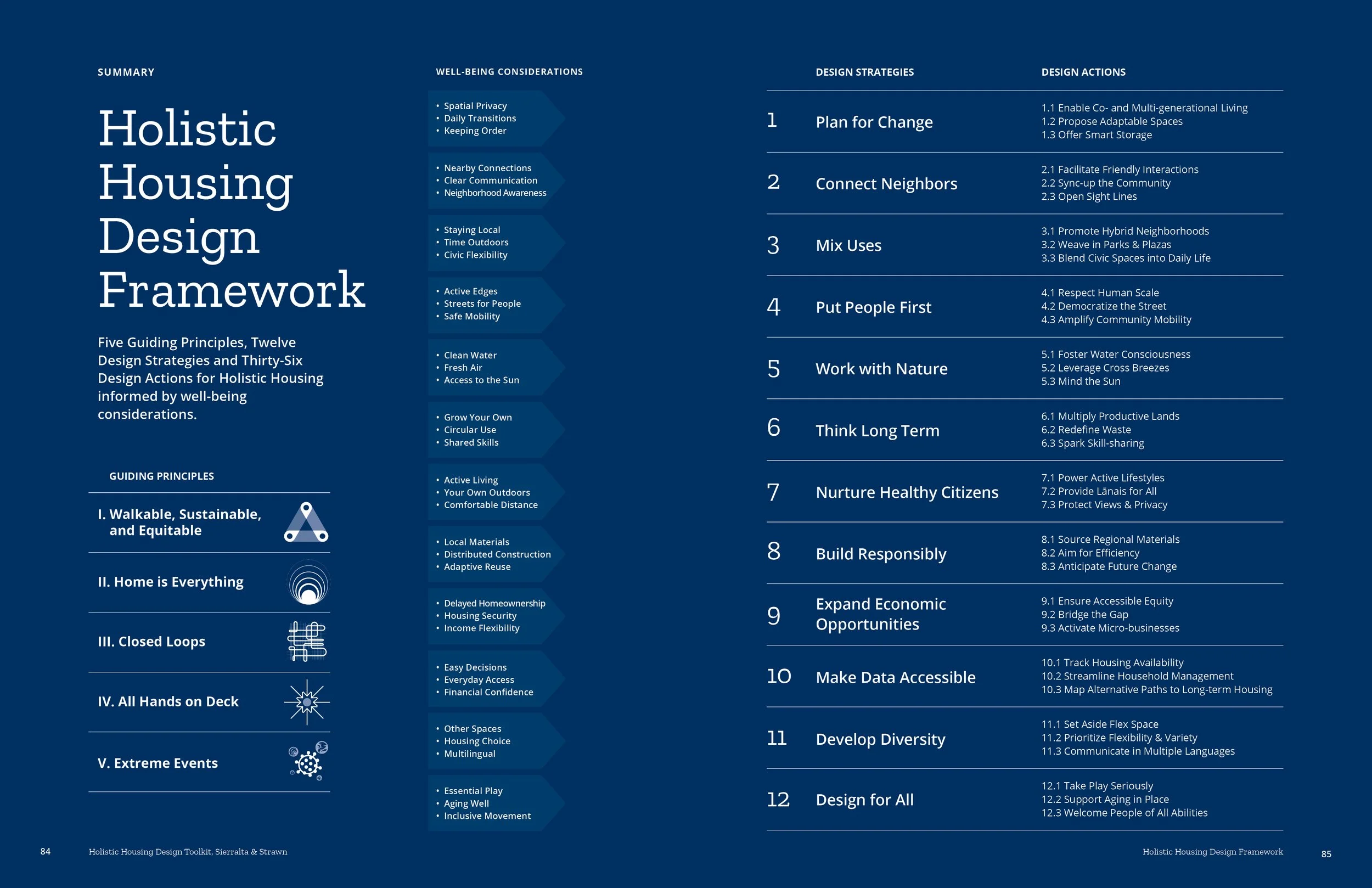
Holistic Housing Design Framework
The Holistic Housing Design Framework is the research-based foundation of the Toolkit. Developed from the lived experiences of residents alongside broader housing research, it identifies five Guiding Principles, twelve Design Strategies, and thirty-six Design Actions for thinking holistically about housing.
Together, they connect broad values for housing with strategies and actionable ideas that can inform planning, design, and evaluation.
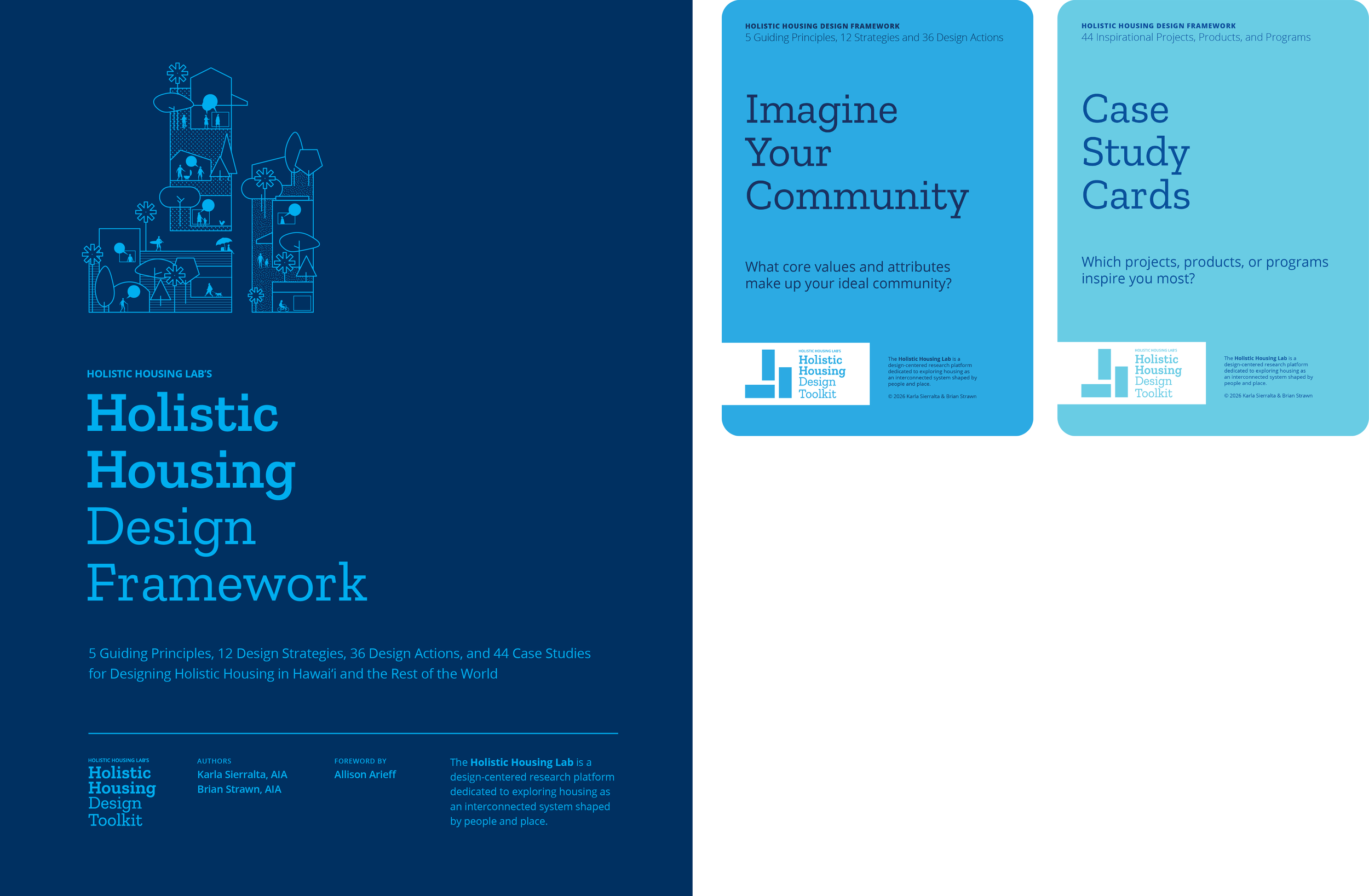
Blue Set
The Blue Set helps translate the values, needs, and priorities of communities into considerations for housing design.
Through the Holistic Housing Design Framework and complementary tools, it creates a shared language for discussing what matters and connecting those ideas to design strategies and precedents.
Green Set
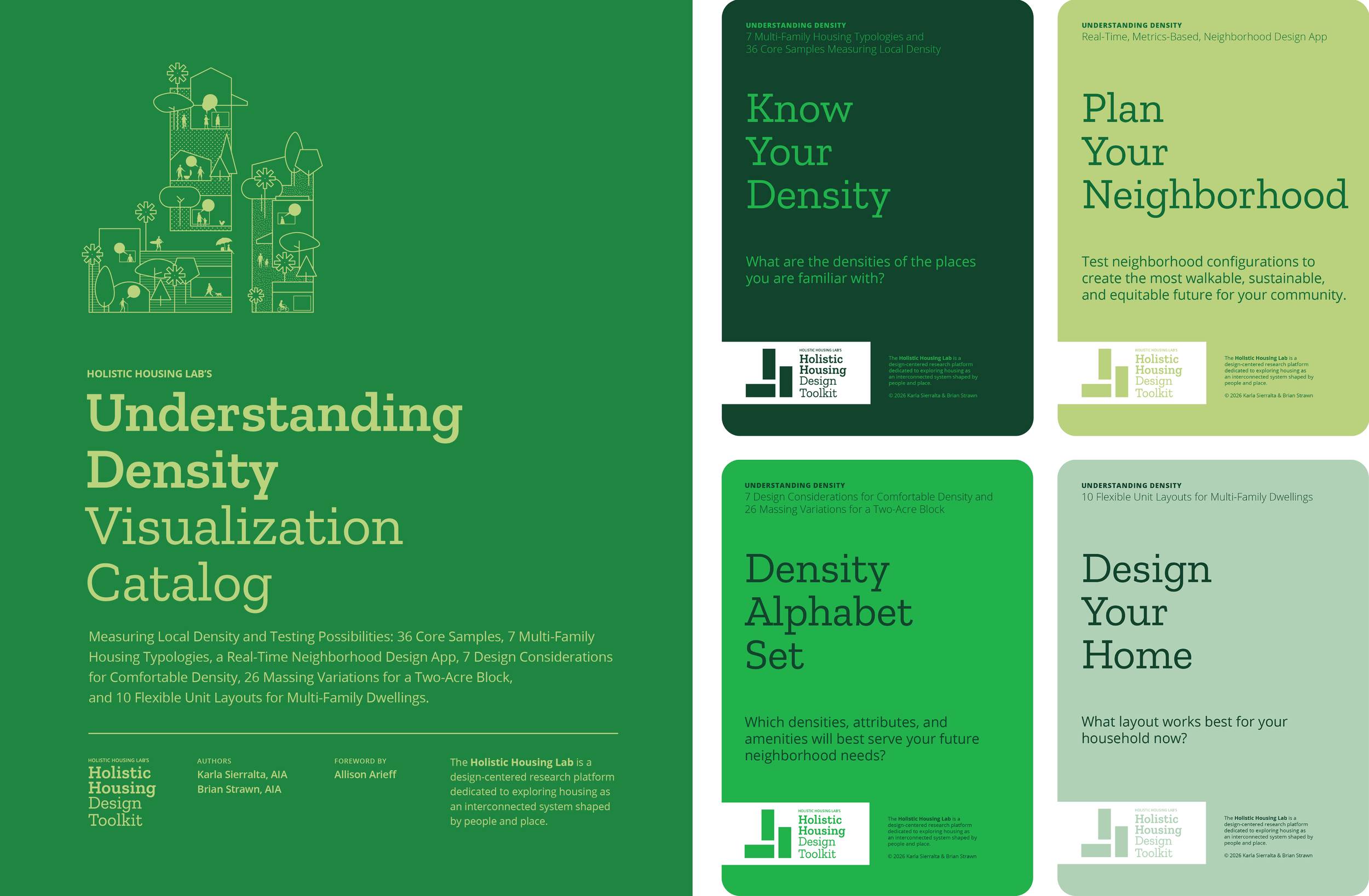
The Green Set makes density easier to understand by connecting numbers and metrics to the physical qualities of places.
Through visualizations and interactive tools, it allows users to compare existing conditions and explore possibilities across scales—from neighborhoods and buildings to individual homes.
Plan Your Neighborhood
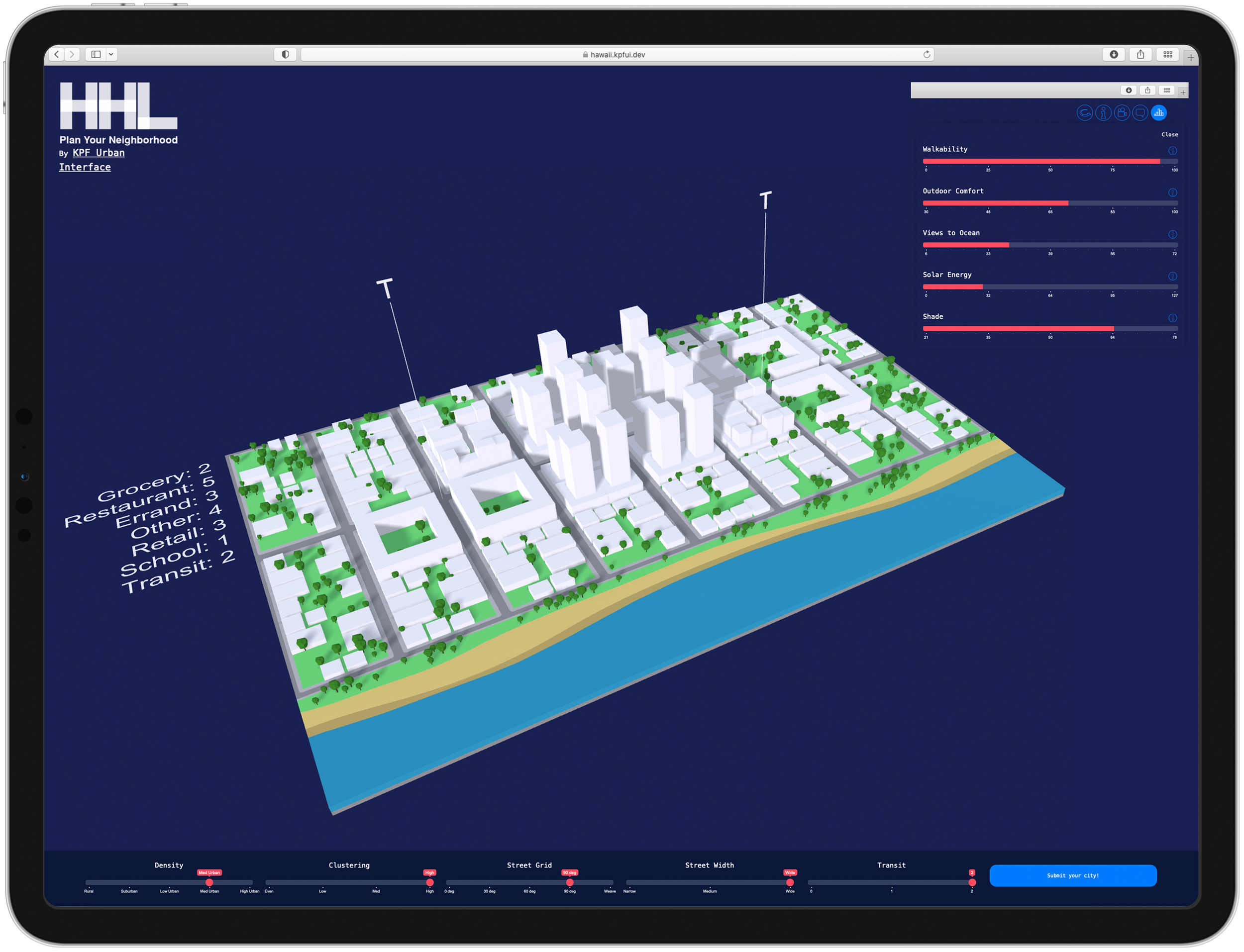
Plan Your Neighborhood makes the relationships between density, neighborhood form, and everyday experience visible in real time.
Developed in collaboration with KPF Urban Interface, the application adapts KPF’s computational design tools to the diverse contexts of Hawai‘i. Users can adjust variables including density, transit, and clustering to generate and compare thousands of neighborhood possibilities while seeing how those choices affect walkability, amenities, and the form of a community.
Yellow Set
The Yellow Set helps put the Toolkit into practice by supporting inclusive and collaborative approaches to planning and design.
Through instructions, activities, worksheets, use cases, and household perspectives, it helps teams engage different voices, structure conversations, and adapt the tools to the needs of a particular community.